Businesses generate enormous amounts of data every day. Customer activity, financial transactions, project updates, and service records all pile up quickly. But more data does not automatically mean better decisions. When information is scattered across systems or recorded inconsistently, teams spend more time reconciling numbers than acting on insights.
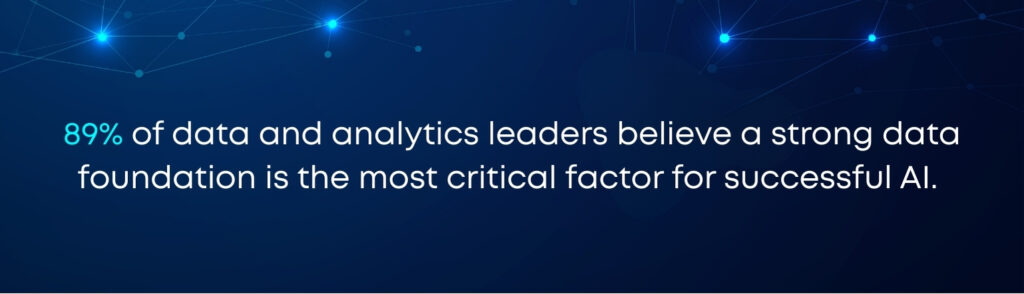
The real challenge is not access to data. It is turning raw data into something reliable and usable. Data must be organized, connected, and consistent before it can support meaningful analysis. Once that foundation is in place, analytics becomes powerful. This is where Einstein AI and Einstein Analytics come into play. They analyze prepared data across Salesforce, highlight patterns that matter, and present them in clear, visual ways, so leaders can move from guessing to making confident, informed decisions. In this blog, we explore how organizations move from raw data to confident decisions, and how Einstein AI turns prepared data into clear, actionable business insights.
Table of Contents
ToggleWhat It Means to Turn Data into Insight
Insight is not just about seeing numbers on a dashboard. It is about understanding what those numbers mean and knowing what to do next. True insight brings together three elements: context, prediction, and action.
Data on its own provides context. It tells you what has already happened, past sales, closed cases, and completed projects. That information is useful, but without foresight, teams are left reacting instead of planning. This is where Einstein Analytics changes the equation. It adds machine learning and predictive intelligence on top of your CRM data, helping teams move beyond historical reporting.
With Einstein Analytics, businesses can:
- Identify patterns that are difficult to spot in static reports or spreadsheets
- Anticipate outcomes by forecasting trends before they impact performance
- Act immediately by embedding insights directly into Salesforce workflows
By bringing data, prediction, and action together, Einstein Analytics turns scattered information into insights teams can act on with confidence.
How Einstein Analytics Actually Works
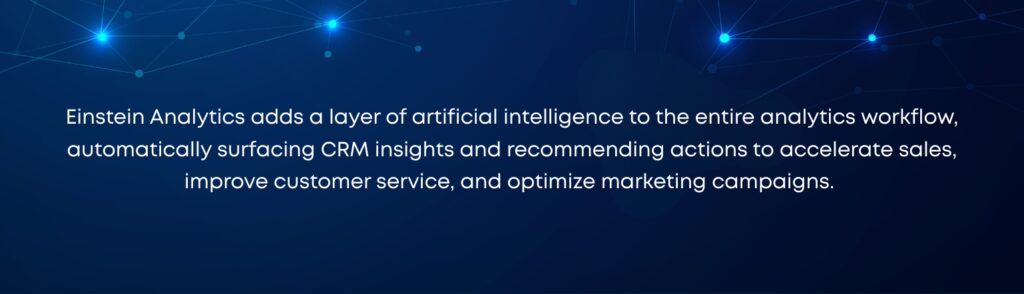
Einstein Analytics brings analytics and AI directly into Salesforce. It uses your CRM data and connects external data to spot trends and performance drivers automatically. There’s no need to build models or rely on complex analysis. The insights surface on their own, right where the work happens.
Because Einstein Analytics is built into Salesforce:
- Insights show up inside the tools your teams already use
- Predictions reflect real sales, customer, and operational activity
- Recommendations tie directly to records, workflows, and next steps
This keeps insights practical and actionable, helping teams move from understanding to execution without extra effort.
Core Capabilities That Turn Data into Decisions
Einstein Analytics works best when insights flow in a clear sequence, from detection to prediction to action. Each capability builds on the previous one, creating a continuous decision loop inside Salesforce.
1. Spot Patterns as They Happen
Einstein Analytics continuously scans live and historical data across Salesforce and connected systems. Instead of waiting for scheduled reports, it detects meaningful shifts as they occur.
What it does:
Einstein Analytics continuously monitors your data as it comes in. It identifies important changes, like sudden drops in sales, spikes in service cases, or unusual patterns in customer behavior, without anyone having to manually search for them. Essentially, it flags anything that stands out automatically.
Why it matters:
When teams see these trends immediately, they can act before problems get worse or opportunities slip away. For example, if a key account shows early signs of churn, the team can intervene promptly, or if a sales trend spikes, they can capitalize on it right away. This real-time awareness saves time and prevents small issues from turning into big ones.
2. Anticipate Outcomes Before They Happen
Once Einstein Analytics detects meaningful patterns in your data, it can use those patterns to forecast future outcomes rather than just describe past performance. This predictive capability goes beyond dashboards by using machine learning to anticipate what is likely to happen next based on historical behavior.
What it does:
Einstein Analytics analyzes historical data to project future trends, such as expected revenue performance, risk of customer churn, upcoming service demand, or delivery bottlenecks, and presents these forecasts within Salesforce.
Why it matters:
Forecasts give leaders a chance to act early. Instead of waiting for results to decline or problems to surface, teams can adjust plans proactively, allocate resources more wisely, and reduce uncertainty in planning.
3. Turn Insights Into Actionable Steps
Detecting trends and forecasting outcomes is valuable, but only if teams know what to do next. Einstein Analytics closes the gap between insight and action by translating data into clear, prioritized recommendations that guide daily decisions.
What it does:
Einstein Analytics converts predictive insights into specific recommendations. It highlights priority deals, flags at-risk customers, suggests high-impact campaigns, and guides operational decisions; all directly within Salesforce. Teams get clear next steps instead of just raw numbers.
Why it matters:
By providing actionable guidance, teams spend less time interpreting data and more time executing. Decisions are faster, more confident, and aligned with business priorities, improving outcomes across sales, service, marketing, and operations.
4. Explore Insights Instantly, No Waiting Required
Static dashboards often leave teams waiting for analysts to pull reports. Einstein Analytics transforms this by offering interactive, self-service dashboards that let users explore data on their own.
What it does:
It provides real-time filtering, drill-downs, and multi-dimensional analysis. Teams can examine trends, compare metrics, and uncover insights directly within Salesforce—without waiting for scheduled reports or manual queries.
Why it matters:
Decision-makers get clarity immediately. Faster access to actionable insights reduces delays, empowers teams to act confidently, and keeps business moving at pace.
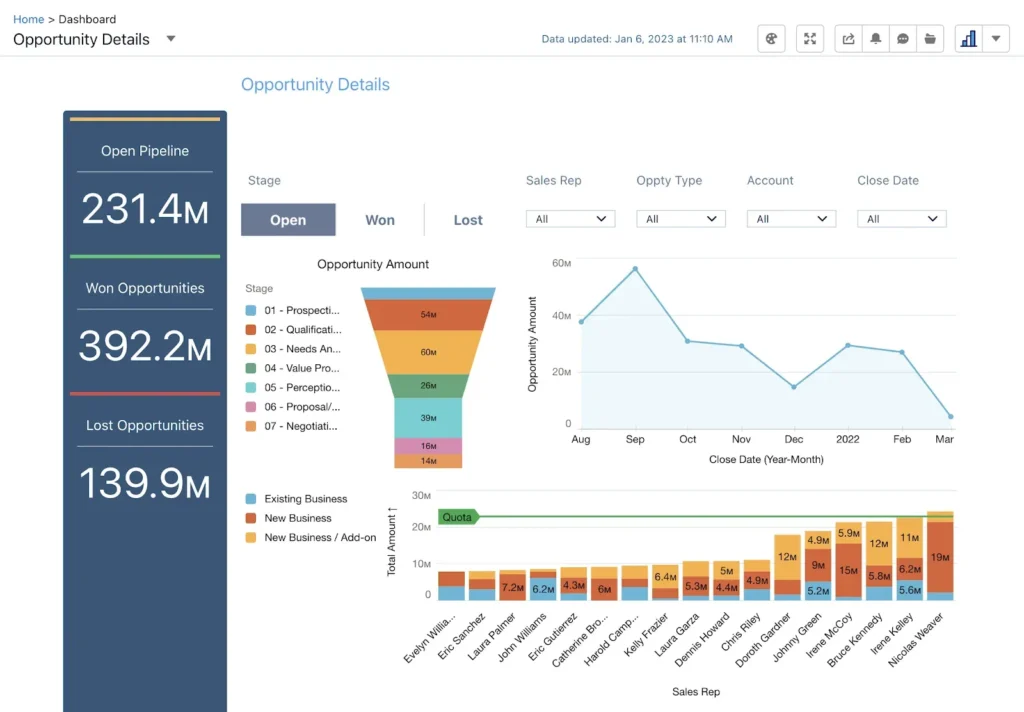
Insights are only useful if they appear where decisions are made. Einstein Analytics embeds intelligence directly into your Salesforce workflows, putting the right information at your fingertips exactly when you need it.
What it does:
It displays insights inside records, lists, dashboards, and operational screens, so teams see relevant data without toggling between tools.
Why it matters:
By reducing context switching, teams act faster, make informed decisions in the moment, and keep business moving efficiently.
Why Many Analytics Projects Fall Short
Even the smartest AI can’t turn messy data into meaningful insight. If your information is scattered across systems, inconsistent across teams, full of duplicates, or not aligned with your workflows, the results of Einstein Analytics will feel unreliable. The critical takeaway: analytics and AI don’t fix bad data, they reveal it. To get insights you can trust; data must be accurate, consistent, and reflective of how your business actually operates.
Getting Your Data Ready for Einstein Analytics
Before diving into Einstein Analytics, it’s essential to prepare your data. This means:
Clean Your Data – Remove duplicates, correct inconsistent values, and fill missing gaps. Clean data creates a foundation you can rely on for insights.
Standardize Business Objects – Align definitions for key elements like customers, products, and opportunities across teams. Standardization ensures everyone interprets data the same way.
Map Data to Workflows – Your data should mirror how your teams actually work. When data reflects reality, analytics reflects reality.
Governance and Quality Controls – Assign ownership, define rules, and set regular checks so data stays accurate over time.
These steps ensure your analytics outputs are credible, actionable, and repeatable.
How AblyPro Helps You Get Analytics-Ready
Einstein Analytics delivers its best value when the data beneath it is accurate, consistent, and aligned with how teams actually work. AblyPro helps organizations build that foundation, so insights are reliable and actionable from day one.
1. Cleaning and normalizing data across Salesforce cloud
We remove duplicates, correct inconsistencies, and resolve missing or conflicting values across Sales, Service, Finance, and other systems. This ensures Einstein Analytics works with trustworthy signals instead of noisy data.
2. Standardizing fields and business definitions
We align key objects such as customers, opportunities, products, and financial metrics so every team uses the same definitions. This prevents conflicting reports and makes insights consistent across dashboards and roles.
3. Aligning data structures with real workflows
We map data to how your teams sell, service, and deliver. When data reflects real processes, analytics display the real performance, not theoretical models.
4. Establishing governance that lasts
We set up ownership, validation rules, and quality checks so data stays accurate as your business evolves. This keeps insights dependable long after analytics is live.
With this preparation in place, Einstein Analytics becomes a decision engine, not just another reporting tool. Teams spend less time questioning numbers and more time acting on them.
Final Thoughts
Turning data into decisions is not about having more dashboards. It’s about having data you can trust, insights you can understand, and signals you can act on at the right moment. Einstein Analytics makes this possible by transforming prepared Salesforce data into predictive, actionable intelligence across teams.
But analytics is only as strong as the data behind it. When data is clean, standardized, and aligned with real business workflows, Einstein Analytics shifts from reporting what happened to guiding what should happen next. That is how organizations move faster, plan smarter, and execute with confidence.
Ready to turn your Salesforce data into decision-ready insights? Connect with us now!
Author

AVP, AblyPro

Murali is the AVP – Certinia at AblyPro with 12+ years of experience in handling complex Certinia and Salesforce applications, implementations, configurations, and customizations. At AblyPro, he has been the pillar of all the Certinia PSA and ERP project deliverables, ranging from design to implementation, project management, and resource management. With years of practical knowledge and expertise in this industry, Murali supports the sales team in strategizing customer solutions to meet the actual business needs of the clients. Murali is a dynamic and experienced professional with multiple Certinia and Salesforce certifications, helping businesses to technically strive in this ever-changing landscape.